How retail design is driving growth for independent opticians
Over the last decade, the conversation around optical practice design has shifted.
When we first started working with opticians, retail design wasn’t really on their agenda. Optical interiors were seen as purely functional, built around clinical needs, with retail just frames displayed on rods… rows and rows of them.
Safe to say, that’s changed. Read on to see what’s driving that change.
Designing for a more competitive optical market
Today, many independent practices recognise that their physical environment is one of the most powerful ways they can differentiate themselves. Beyond their clinical expertise, products and services, the experience they create for customers has become a defining part of how they stand out.
In many ways, this reflects a broader shift within the profession. Patients are no longer viewed purely as patients – they are customers too. Their expectations are shaped by the retail environments they encounter every day, and they increasingly expect the same level of experience when they walk into an optical practice.
For opticians, this creates both a challenge and an opportunity. The practices that succeed are those that learn to think a little more like retailers, and in doing so create environments that deliver expert eyecare while presenting eyewear in a way that engages customers and strengthens the brand.
Because when design is approached strategically, it does far more than improve the look of a space. It can actively support the way a practice works, improve the customer journey and ultimately drive stronger commercial performance.
How design impacts every part of your optical business
The optical market has never been more competitive.
Independent practices are operating in a landscape shaped by online retailers, national multiples and fashion-led eyewear brands, all of which have raised the bar when it comes to customer experience. Patients now arrive with higher expectations about how a space should feel, how products are presented and how the overall visit unfolds.
This is where the design of a practice becomes far more than a visual consideration.
A well-considered environment supports the entire customer journey. From the moment someone walks through the door to the point where they are selecting frames or discussing their eyewear needs with a dispensing optician. Layout, lighting, merchandising and spatial flow all influence how comfortable people feel in the space and how confident they are in the service being provided.
As Dean Waugh, Founder and Creative Director of Retail Experience Design, explains:
“The most successful practices understand that design isn’t just about creating something that looks impressive. It’s about creating a space that actively supports the way the business works clinically and commercially.”
When those elements are aligned, the practice environment becomes a powerful asset. It can help practices communicate their brand, showcase their eyewear offer more effectively and create a memorable experience that keeps customers coming back.
In other words, good design doesn’t simply improve how a practice looks – it improves how it performs.
Thinking like a retailer
One of the biggest shifts we’ve seen in the optical sector over the past decade is the growing recognition that opticians operate in both a healthcare and retail environment.
At its heart, an optical practice will always be about delivering expert clinical care. But the reality is that eyewear plays a significant role in how the business performs.
Independent practices are increasingly embracing this idea, not by compromising their clinical standards, but by recognising that the retail experience is an important part of the overall service they provide.
As Dean Waugh goes on to explain:
“Patients are consumers too. They expect the same quality of environment and experience they encounter in other areas of retail. When practices begin to think a little more like retailers, it opens up huge opportunities to strengthen their brand and elevate their eyewear offer.”
In practical terms, this means considering how the space encourages customers to explore frames, interact with products and feel comfortable spending time in the practice.
Traditional optical interiors often prioritised function above all else, with frame displays arranged in a purely practical way and retail areas treated as secondary to the clinical spaces. Today, many practices are taking a different approach.
By applying retail design principles such as thoughtful merchandising, engaging displays and carefully considered lighting and materials, opticians can create environments that showcase their eyewear collections and make the browsing experience far more enjoyable. The result is a space that works harder for the business.
Customers feel more relaxed exploring different options. Dispensing conversations become more natural and engaging. And the practice itself begins to feel less like a purely transactional environment and more like a destination where people enjoy spending time.
Designing the patient-customer journey
The configuration of an optical practice has a significant impact on the overall experience. From the moment someone walks through the door, the environment should guide them naturally through each stage of their visit – browsing frames, speaking with the team, attending their eye examination and ultimately choosing their eyewear.
When a space is poorly planned, these interactions can feel fragmented. Customers may be unsure where to go, retail displays can feel disjointed and valuable opportunities for conversation and engagement are easily missed.
A well-considered layout, on the other hand, brings clarity and confidence to the experience.
Emma Hastie, Senior Retail Designer explains:
“Space planning is one of the most important aspects of optical design. When the layout supports the way the team works and the way customers experience the practice, everything flows more naturally – from consultations to dispensing.Dispensing in particular deserves careful attention. It’s where clinical expertise meets retail experience and where opticians can focus on each customer’s individual needs”
Creating comfortable, well-designed spaces for these conversations allows teams to deliver a more personalised service and ultimately strengthen the relationship between practice and patient.
Elevating your optical retail offer
Alongside layout and customer flow, the way eyewear is presented within the practice plays a major role in shaping the retail experience.
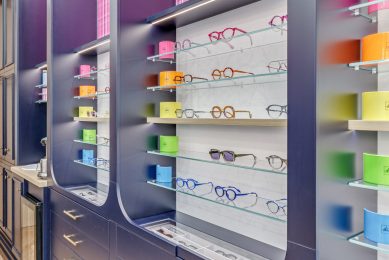
Traditional optical interiors often treated frame displays as purely functional – frames arranged to maximise capacity rather than to create a compelling retail experience. Modern practices are increasingly taking a more considered approach.
Thoughtful merchandising, well-designed display systems and carefully integrated lighting can help customers distinguish between different brands, collections and styles. Rather than feeling overwhelmed by rows of frames, customers are able to browse more comfortably and engage more naturally with the products.
As Taylor Sharpe, Senior Designer at Retail Experience Design explains:
“When eyewear is presented well, people feel more confident exploring different styles and engaging in the dispensing conversation. The space itself helps support that process.
Material choices, finishes and lighting all contribute to the overall atmosphere of the practice. When these elements are carefully balanced, the environment begins to feel less like a purely clinical setting and more like a destination for eyewear”
Delivering measurable results
While the visual transformation of a practice is often the most immediate change people notice after a redesign, the long-term impact is usually seen in the performance of the business itself.
Across a wide range of projects, practices that have invested in strategic redesign have reported improvements in sales, patient numbers and overall commercial performance.
In one independent practice, working with Retail Experience Design, confirmed that their redesign helped reposition the business as a premium eye care destination. By improving the flow of the space and enhancing the customer journey, the practice was able to introduce exclusive eyewear brands and focus more confidently on styling. Since the transformation, average dispense increased by more than 114%, exam fees rose by over 133%, and turnover grew by 52%.
Another practice experienced immediate results after reopening following a redesign. They recorded their most profitable first quarter in nine years, with sales increasing by around 20% month on month and more than 300 new patients and eye examinations.
In another project involving a relocation and complete redesign, turnover rose by 35%, retail sales increased by 17%, and the practice experienced a 26% rise in new patients.
These examples highlight an important point. When design supports the way a practice works – improving flow, elevating the retail experience and strengthening brand identity – the commercial benefits often follow.
This is what we mean by results-driven design: design that actively supports the success and growth of the business.
As Taylor Sharpe goes on to explain:
“A successful redesign isn’t about making a space look better for the sake of it. It’s about creating an environment that supports the business – helping practices grow, attract the right customers and position themselves confidently in the market.”
The future role of retail design for independent opticians
As the optical sector continues to evolve, the role of retail design within independent practices will only become more important.
Patients increasingly expect environments that feel welcoming, engaging and aligned with the quality of service they receive. At the same time, independent opticians continue to look for ways to differentiate themselves in a competitive market.
The most successful practices are those that see their physical space not simply as a place to work, but as a strategic asset for the business.
Ultimately, a well-designed optical practice does more than create a beautiful environment. It creates a space where clinical excellence and retail performance work together, delivering a better experience for customers while supporting the long-term success of the business.
Let’s transform your space together
If you want to know more, get in touch – we’re always happy talking shop.
Contact us
Related articles